
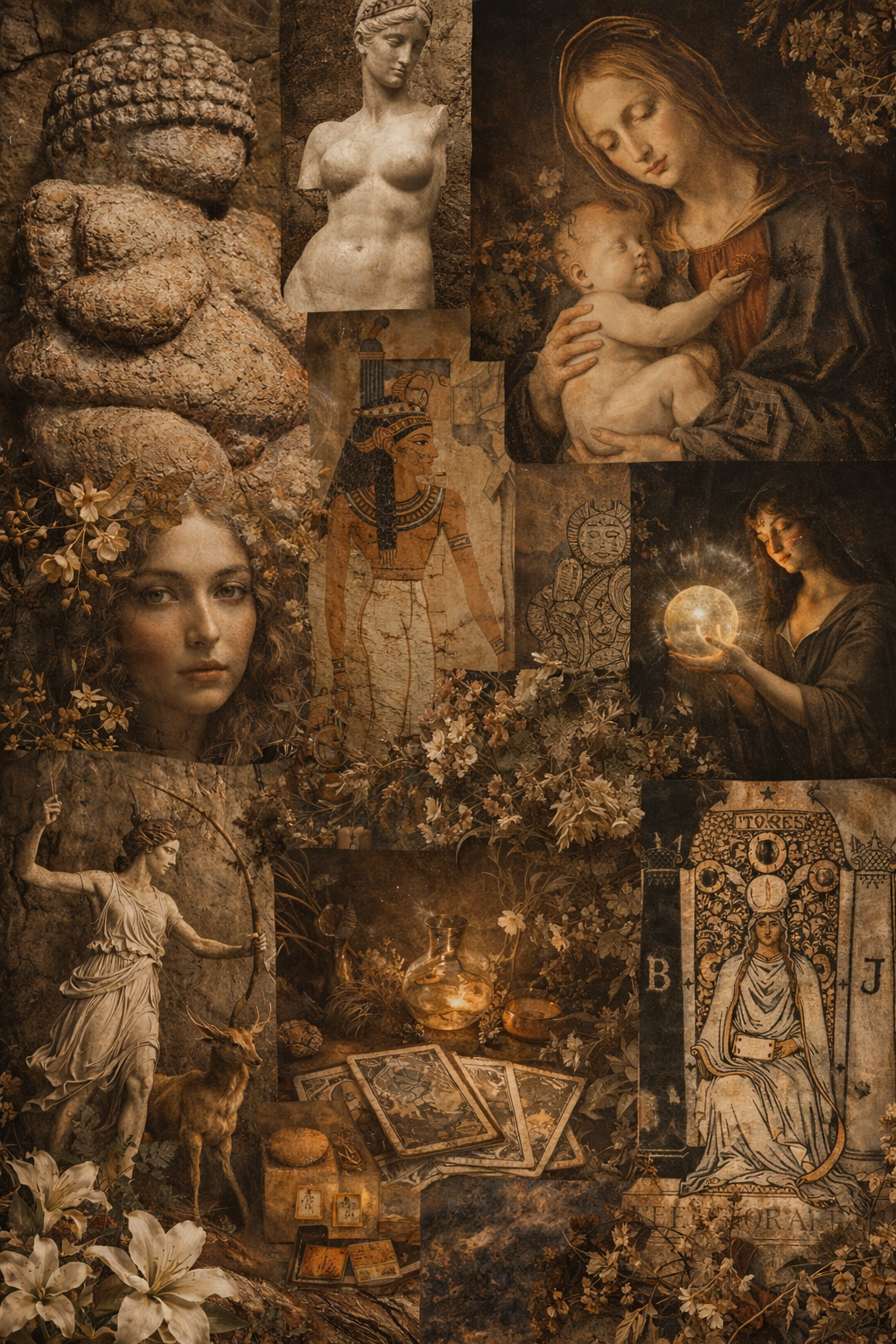
Archetypes
An archetype is not a personality type. It is a pattern older than language — a recurring shape of human experience that appears across myth, art, psychology, and the living world. The Mother. The Warrior. The Weaver. The Wise Woman, these are currents that have always moved through us and us through them.
Carl Jung described archetypes as part of the collective psyche, but people understood them long before psychology identified them. They were carved into stone, threaded into cloth, spoken across fires, passed down through the hands of women who knew that certain patterns transcend any single life.
Archetypes are not prescriptions for who to be. A woman is not an archetype. She is an ecosystem: vast, fluid, capable of holding many truths at once. We move between archetypal energies across a day, a season, a lifetime. What changes is which current is most alive in us right now.
Many of us learn, over time, to divide ourselves. To soften what is strong. To silence what knows. To separate tenderness from power, as if the two could not live in the same body. Working consciously with archetypes offers a way to call those pieces home — not to become something new, but to remember what was always there.
Each piece I make is an invitation to integration. Not a label. but A mirror.. A way of meeting yourself at the level of depth you already carry.
What follows is the symbolic vocabulary I work from. These are the archetypes that move through my making. It is not exhaustive, and it is not fixed. It is the living grammar of this work.
The Maiden
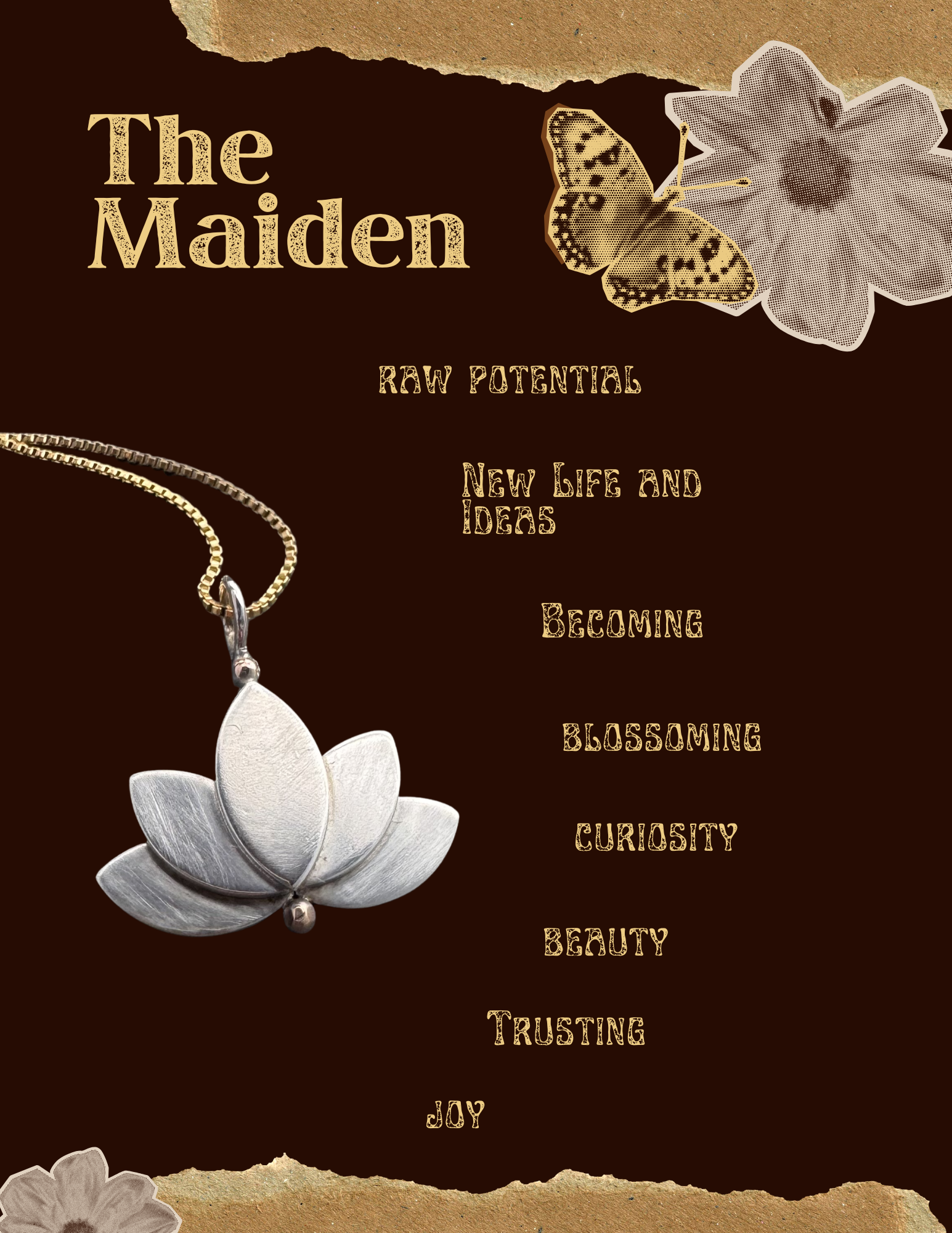
The Maiden is the archetype of new life, fresh ideas, and the sacred moment of becoming and living in the season of blossoming, beauty, curiosity, and raw potential. Often mistaken for naïve, she is better understood as trusting: the courageous choice to stay open to life, even after hardship. She is resilience wrapped in wonder, rising again and again with joyful abandon. Like the lotus, rooted in dark, muddy earth yet reaching for light, she can hold both truths at once—grounded in shadow while unapologetically blooming in radiance.
THe Mother
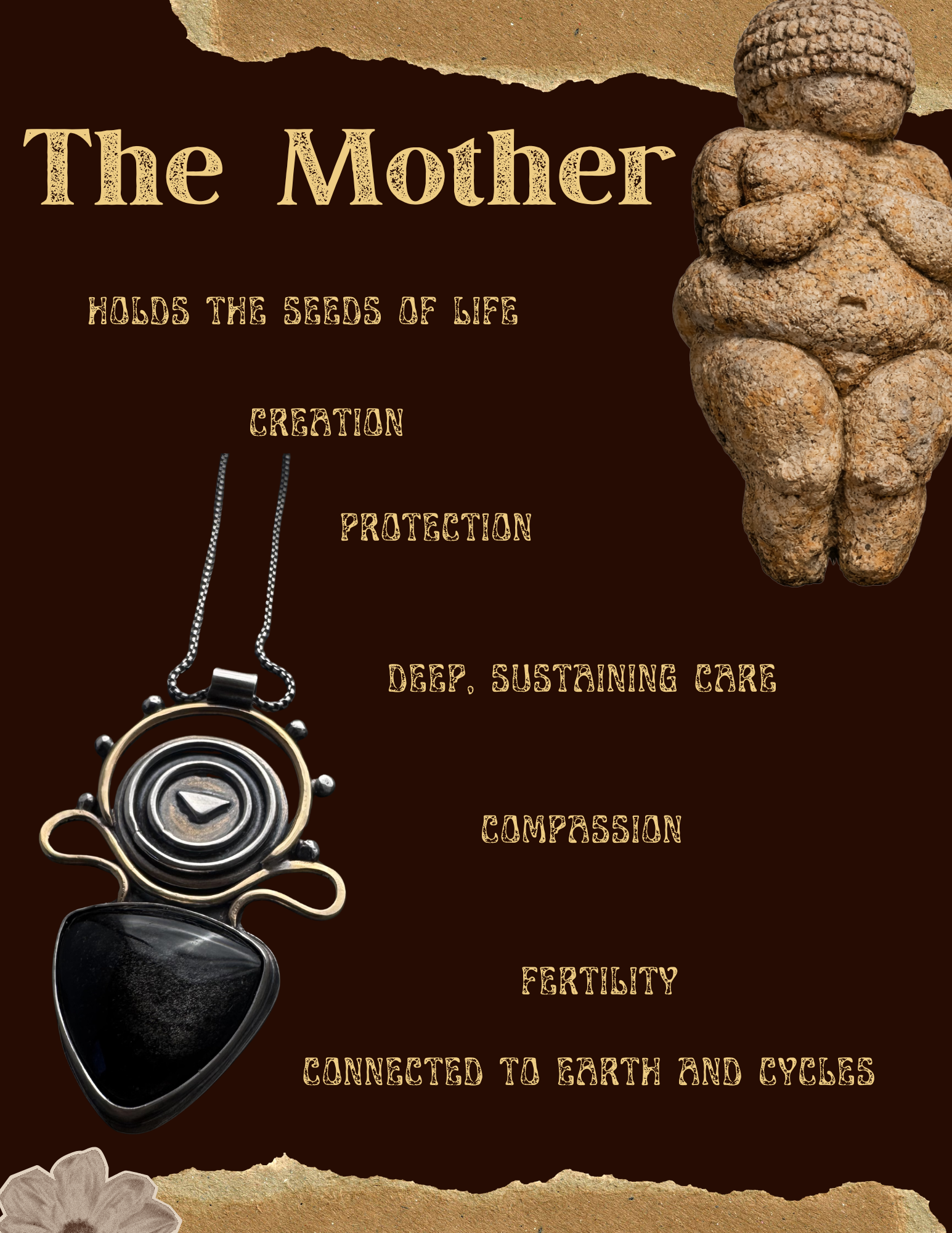
The Mother is the archetype of creation, protection, and sustaining care she is not defined by raising children, but by the capacity to hold and nurture the seeds of life in all forms: ideas, ecosystems, communities, creativity, and becoming. She is fertile ground where potential takes root, the steady force that protects what is fragile and feeds life long before it is visible. Connected to the Great Mother—the ancient creative force that births, holds, nourishes, and receives all life. she lives in the soil, the ocean, the winter womb, and the arms that catch and steady us. This archetype honors anyone who nurtures or has been nurtured by the earth, ancestors, mentors, or community, reminding us that to sustain life, in any form, is sacred creation.

The Wise Woman/Crone
The Wise Woman, often called the Crone, is the archetype of deep knowing, truth-telling, and discernment. She is the one who has lived through many seasons and no longer feels the need to perform, prove, or shrink, standing firmly in what is real. She represents not an ending but a distillation: the clearing of illusion and the courage to name truth, carrying lived wisdom in her bones and trusting experience as intelligence. Deeply tied to cycles of death and rebirth—of identities, roles, and stories—she teaches that letting go is refinement and power. As keeper of memory, seer, and listener, she holds ancestral, earth, and lived wisdom at once, reminding us that everything we survive can become medicine, and that there is profound beauty in truth, depth, aging, and fully inhabiting who we are.
The healer
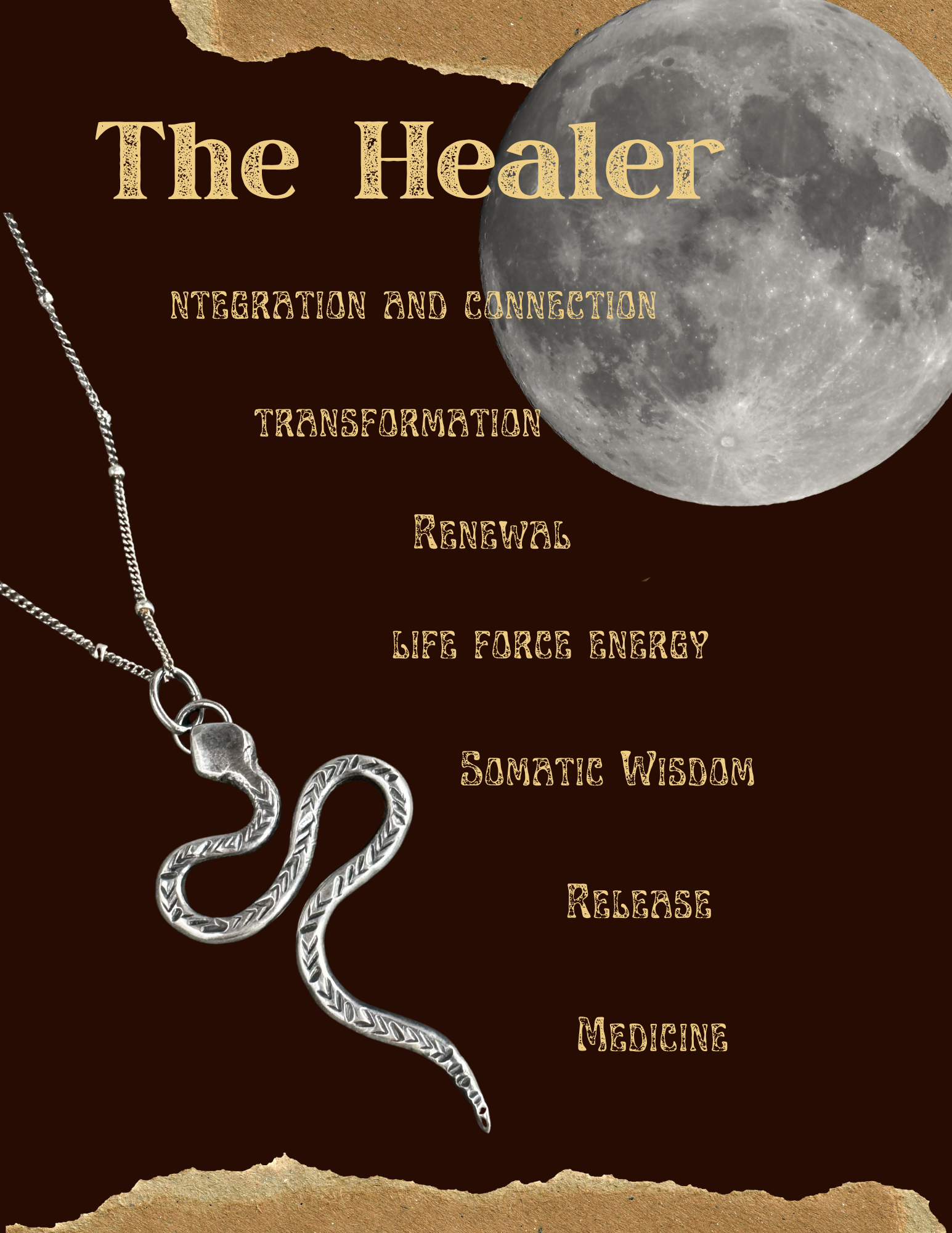
The Healer is the archetype of restoration, transformation, repair and renewal. She understands that healing is not about returning to who we were, but becoming more whole, integrated, and fully alive. She moves with the intelligence of the body and the wisdom of the earth, meeting pain and shadow not as enemies but as guides for what must change, release, or be reborn. Like the serpent, an ancient symbol of life force and renewal, she teaches that we shed what we have outgrown because we are evolving, not broken.. She reminds us that healing is not linear but spiral, deepening each time we return to ourselves, showing us that transformation is natural and that everything we have lived through can become medicine.
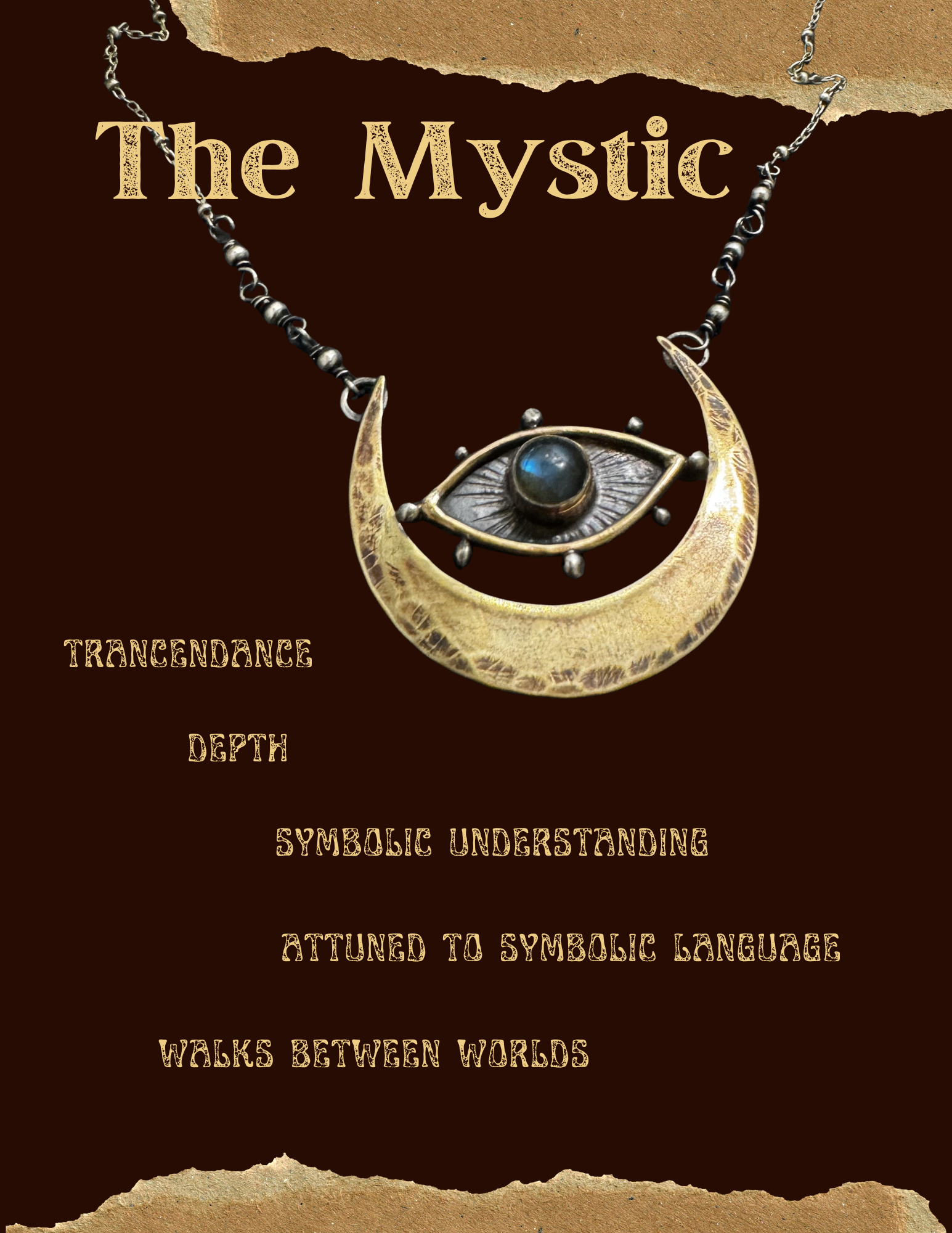
The Mystic
The Mystic is the archetype of inner seeing, deep listening, and connection to the unseen patterns shaping our world, living at the threshold between the known and the mysterious and trusting that not everything meaningful can be measured, yet can still be true. She senses the hidden architecture beneath ordinary life—synchronicity, symbolism, energy, and timing while recognizing intuition as a form of intelligence. Aligned with the Eye and Crescent Moon, she embodies clear perception, awareness, cycles, and the liminal space where transformation quietly unfolds. The Mystic reminds us we are part of an interconnected whole, teaching us to trust subtle signals, dreams, nature, and the body’s knowing, and to hold logic and intuition together while relating to mystery as something to live with, not solve.
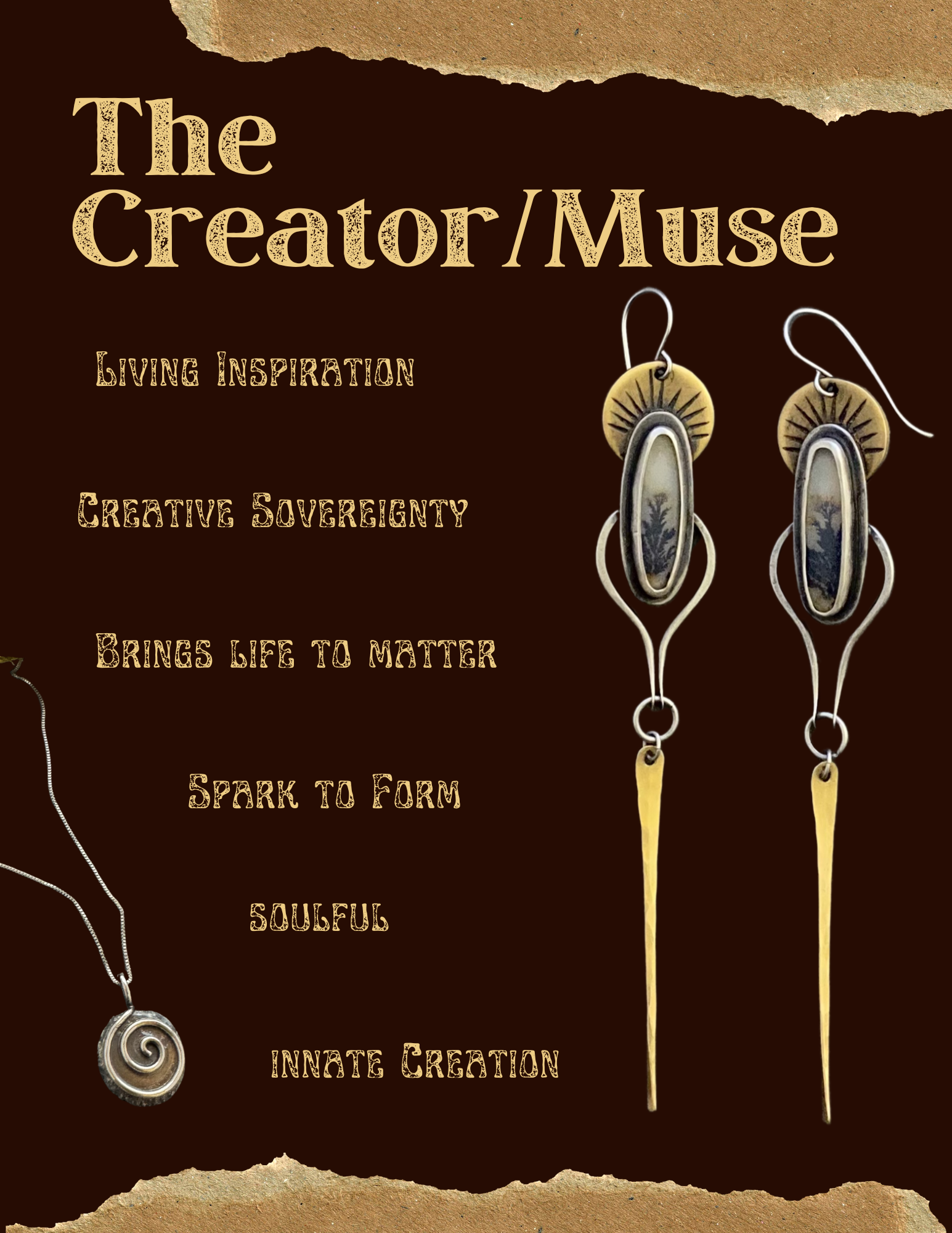
the creator/muse
The Muse is not an object of inspiration but the living spark of inspiration within you and between you and the world around you. Rather than existing to serve others’ creativity, she holds authorship. She feels the spark, follows curiosity, and allows inspiration to move through her into form, where Muse and Creator exist together. one senses the impulse, the other shapes it. She teaches that inspiration is not performance but relationship with the environment, material, story, emotion, and life itself. She reminds us that creativity is not reserved for artists, but is a natural human way of participating in shaping the world we live within.
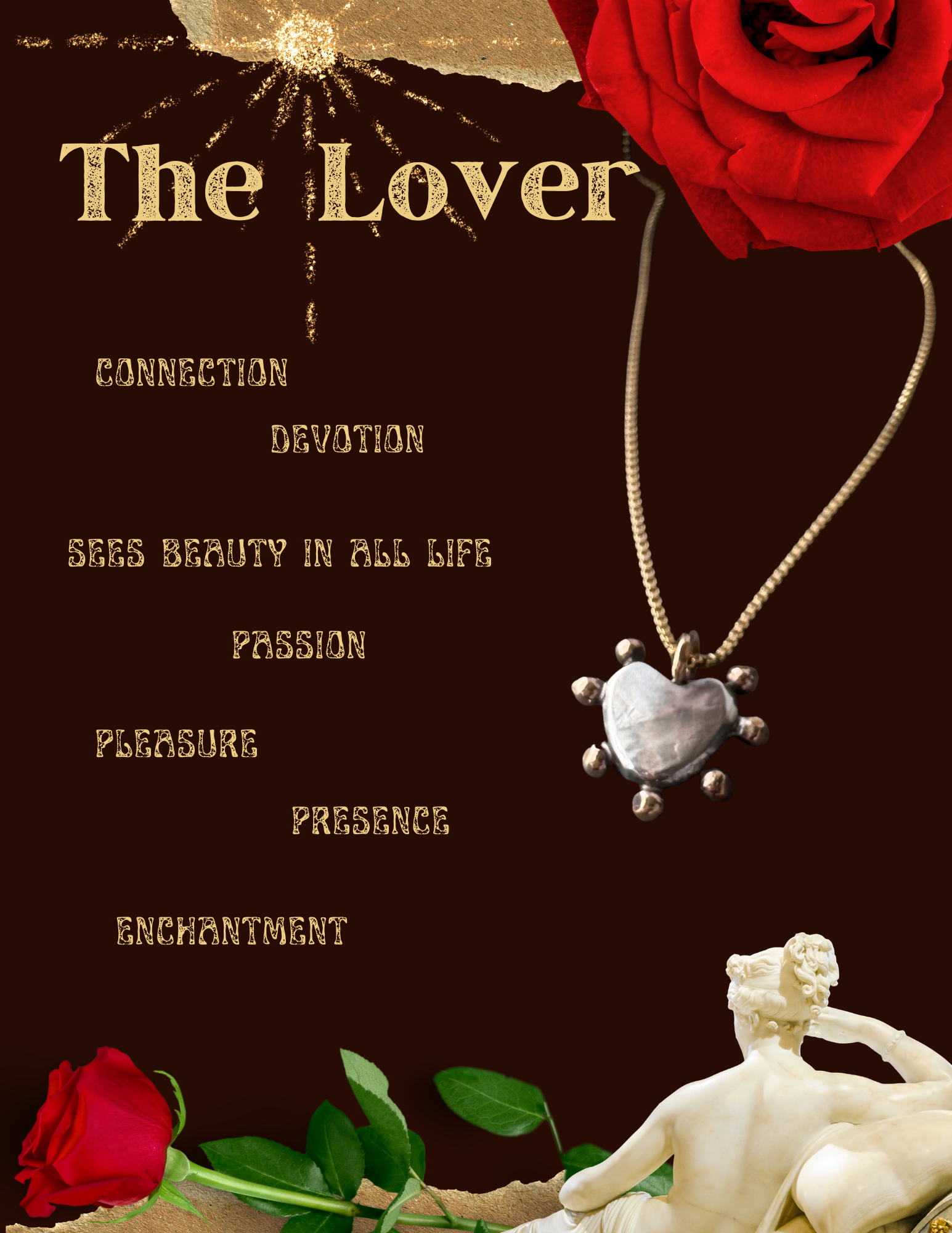
The Lover
The Lover is the archetype of connection, devotion, emotional courage, pleasure, and relational presence without losing selfhood, She remains open to beauty, intimacy, and feeling while staying rooted in personal worth. She extends beyond romance into relationship with people, art, land, body, sensation, and life itself, reminding us that connection sustains life through care, attention, and presence. At her deepest expression, she is resilient—keeping the heart open to beauty and love even after loss or pain, not from naivety but from understanding that disconnection cuts us off from life. She carries memory, wisdom, and boundaries while refusing to let past harm limit what is possible, moving through vulnerability and presence rather than performance or approval. She knows that life is complex, but at its core, it is beautiful.
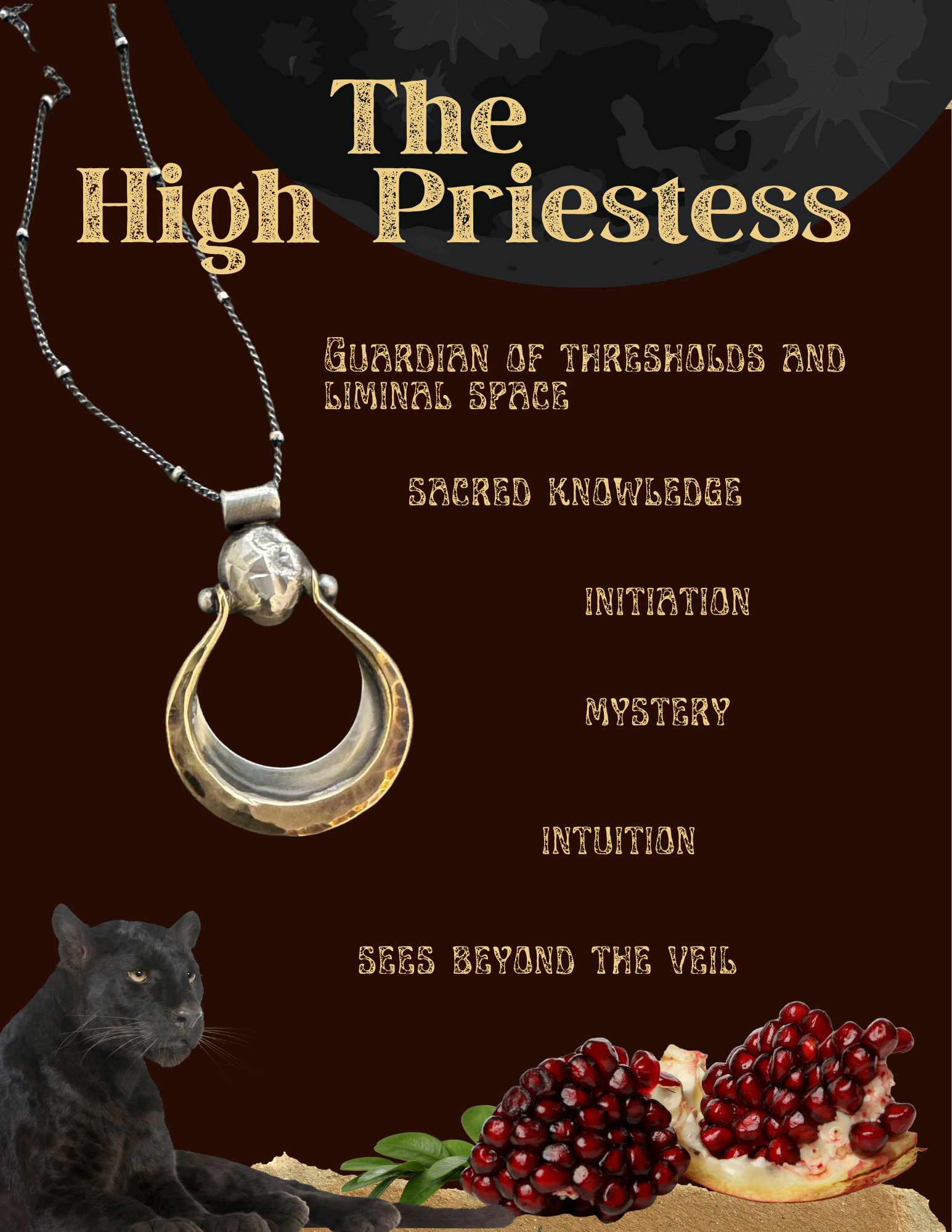
the high priestess
The High Priestess is the archetype of inner knowing, sacred boundary, and deep listening beneath the surface noise. She stands at threshold between what was and what is emerging while holding space for transformation to unfold in its right timing. She embodies quiet, steady presence in uncertainty, darkness, and transition, understanding that some wisdom must be revealed slowly and approached with reverence. Like a torch in the underworld, she does not remove darkness but brings light for safe passage, holding relationship with hidden knowledge not for power, but to protect what is not yet ready. She teaches the difference between privacy and isolation, mystery and avoidance, and intuition and fear, reminding us that clarity often arises through stillness and trust in inner knowing.
the visionary
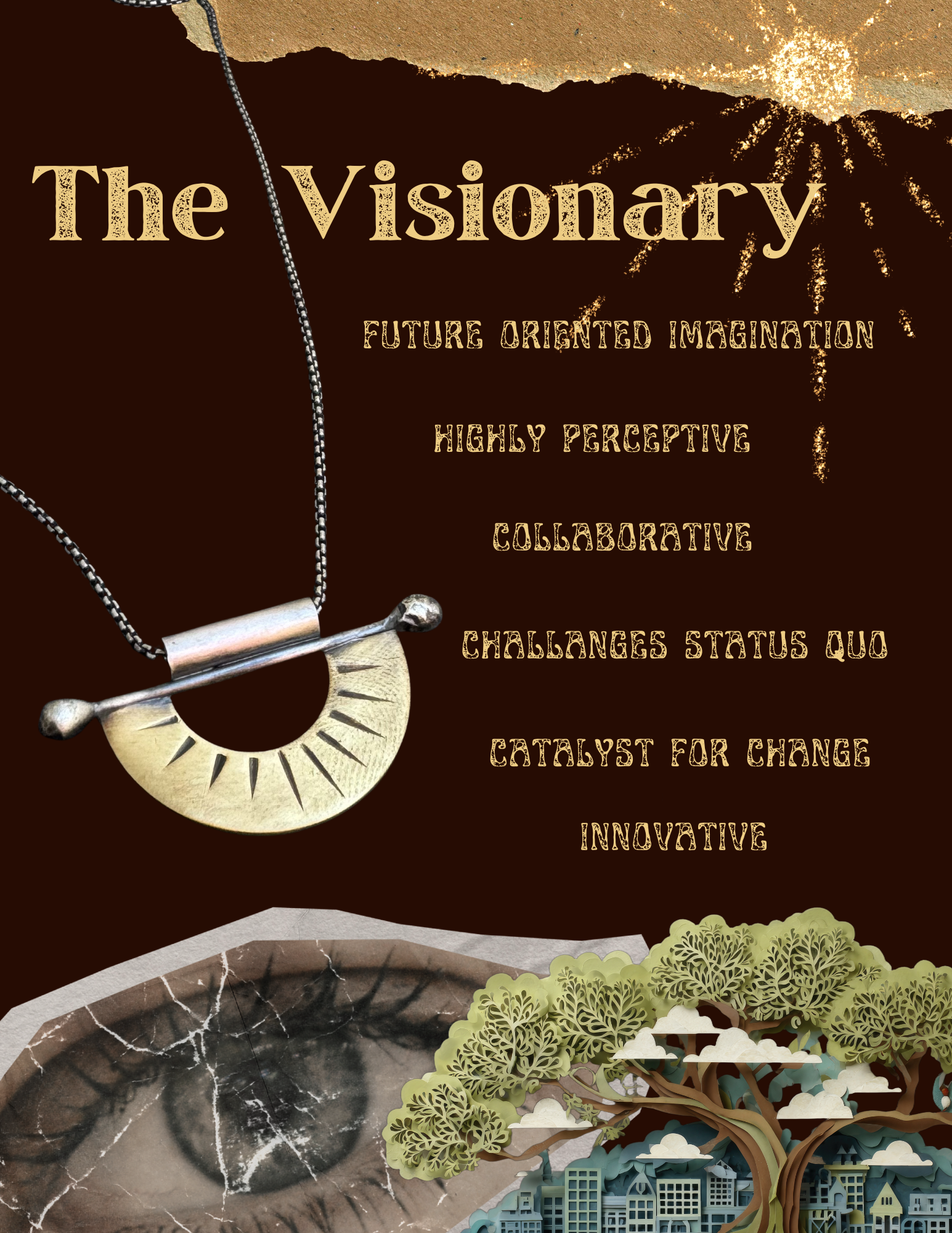
The Visionary is the archetype of sensing what is emerging before it is fully visible, working with possibility, pattern, and future-oriented imagination as an early recognition of what will be. Deeply rooted in the present, she reads systems, cycles, and subtle signals to understand where things are heading, knowing the future is shaped through small choices that become patterns and, ultimately, worlds. She is collaborative by nature, holding the future as something built collectively through culture, care, creativity, and the structures we choose to support. At her deepest expression, the Visionary carries grounded hope—the courage to imagine life-supporting possibilities and help bring them into reality through presence, patience, and meaningful action.
The empress
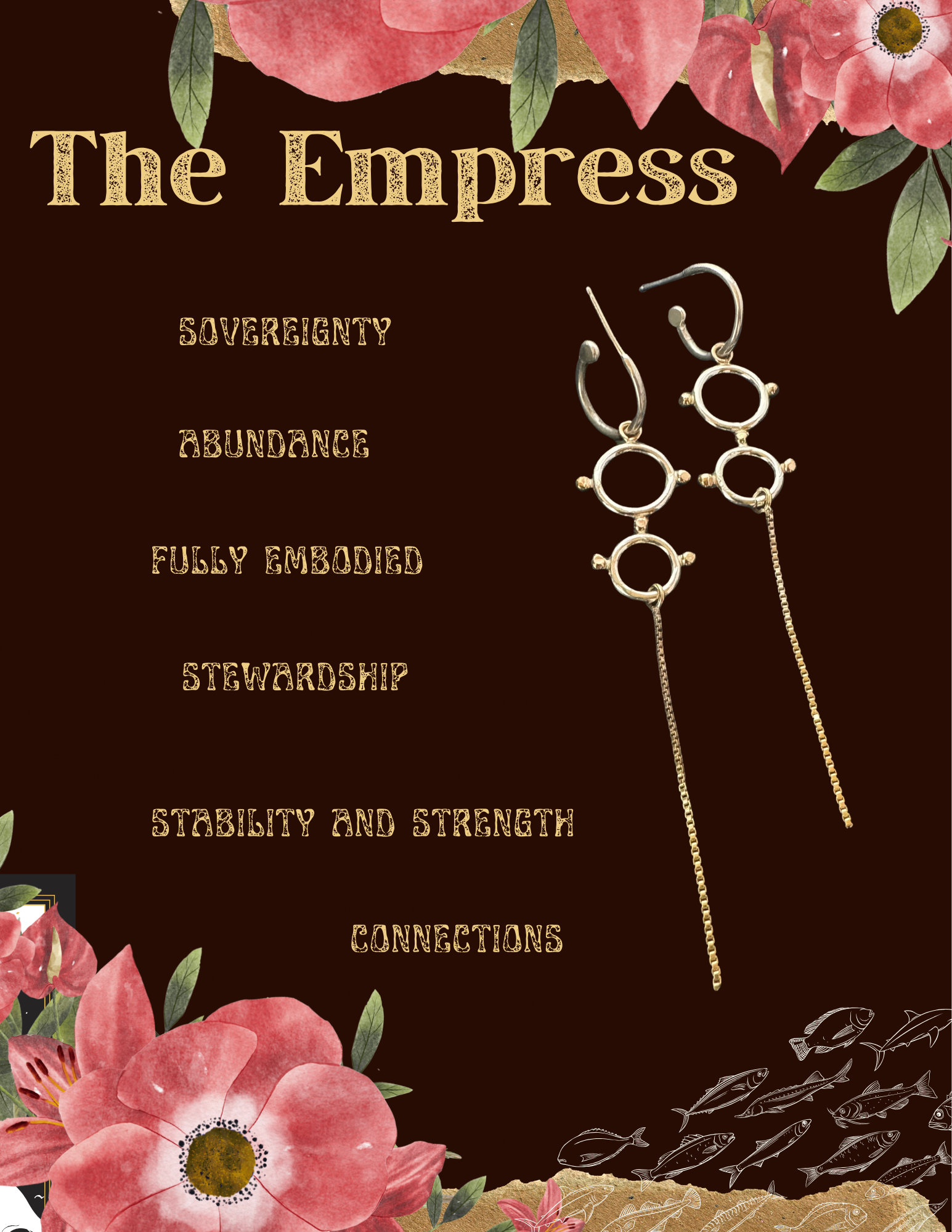
The Empress is the archetype of embodied life, generative abundance, sensual presence, and full participation in living and sovereignty. She creates conditions where life can root, grow, and thrive for individuals, communities, and future generations. She carries foundational Mother energy that is not only nurturing but stabilizing, understanding abundance as the steady, sustainable flow of nourishment, creativity, beauty, and resources that support life over time. Fully rooted in the body, she honors pleasure and sensory experience as signs of vitality and presence, while thinking in terms of legacy—not status, but what continues to nourish life after her. The Empress does not dominate, she anchors through cultivating stability strong enough to hold growth and change.
the warrior
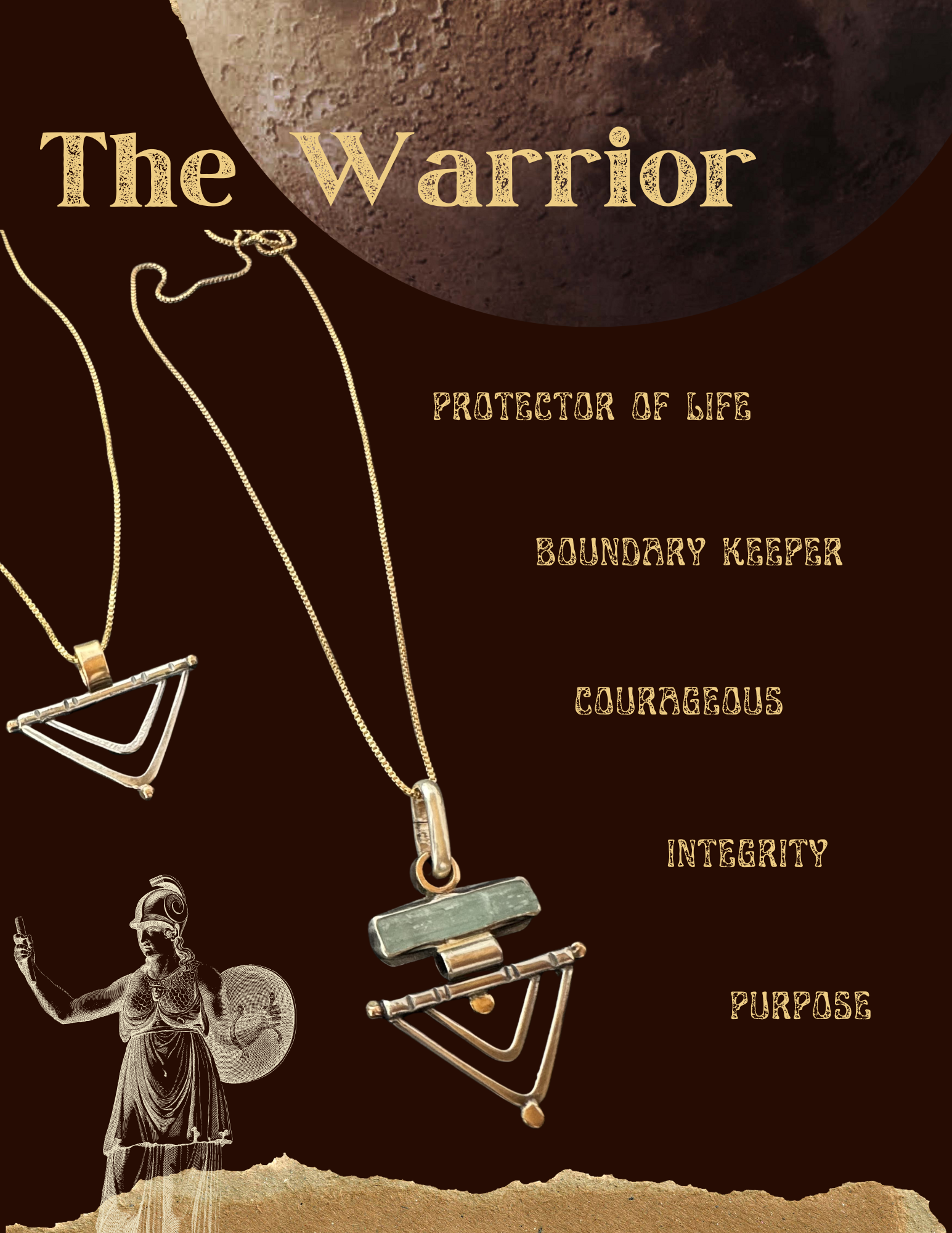
The Warrior is the archetype of protection, boundary, and the courage to stand for life, truth, and what must be preserved, driven not by aggression but by devotion to what is living, vulnerable, and worth defending. She places herself between harm and what must be protected, understanding that true power is shown through acting in service of life—whether for people, community, land, or future generations. She knows courage is moving forward in alignment with values despite fear, using voice and action with intention rather than ego or performance. At her deepest expression, she protects living systems and reminds us that boundaries are not rejection, but protection of what is sacred.
the wild woman
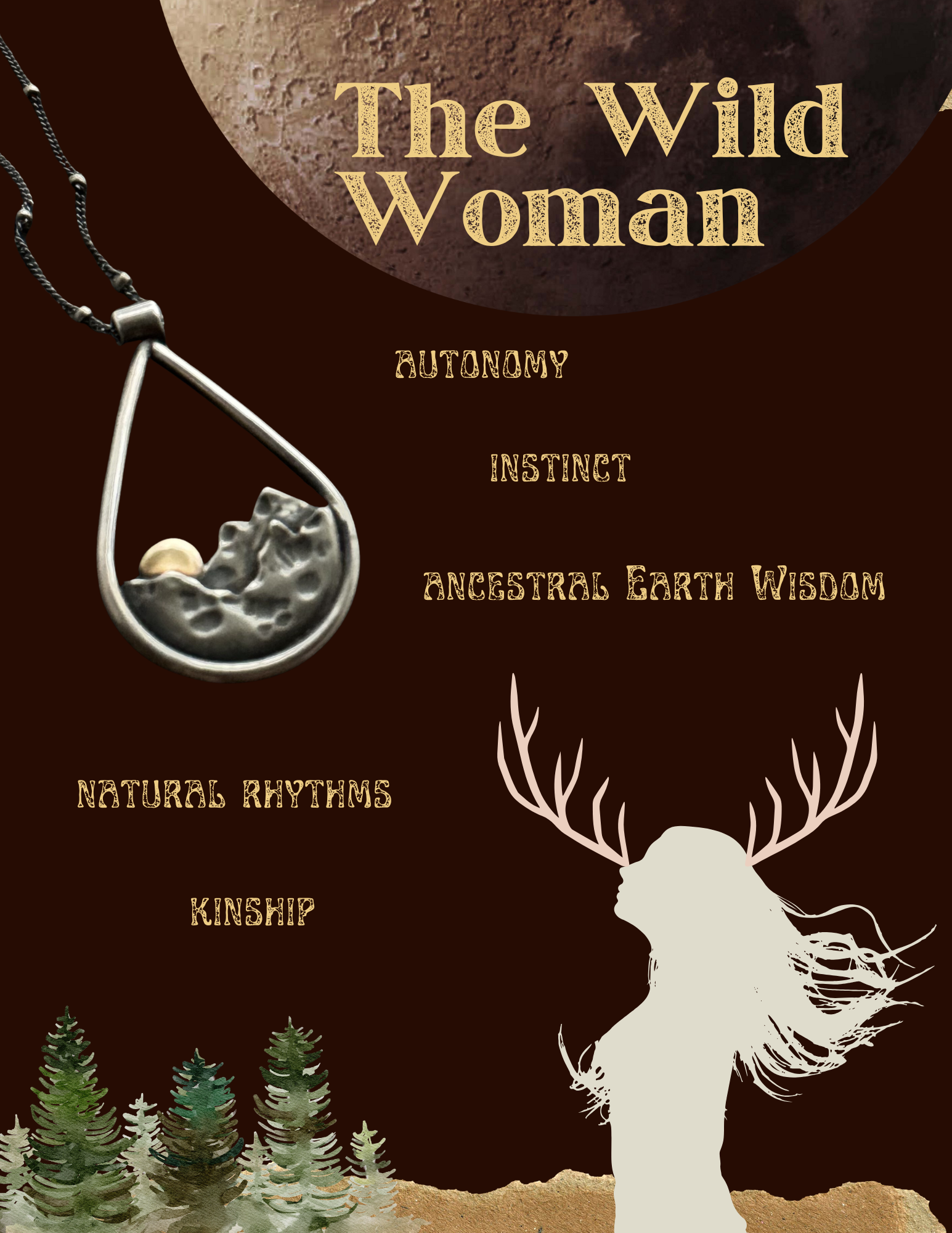
The Wild Woman is the archetype of instinct, natural rhythm, and the body’s intelligence as part of the living world. She embodies the uncolonized life energy that moves with season, environment, and truth rather than external approval. Deeply loyal to what is real and life-supporting, she protects balance and integrity while trusting sensation, pattern, and instinct as valid forms of knowledge. She lives in cycles of rest and movement, solitude and connection, creation and release, seeking not to control life but to move in relationship with it. The Wild Woman reminds us that we are not separate from nature, we are expressions of it, and that belonging is something inherent, not something we must earn.
the weaver
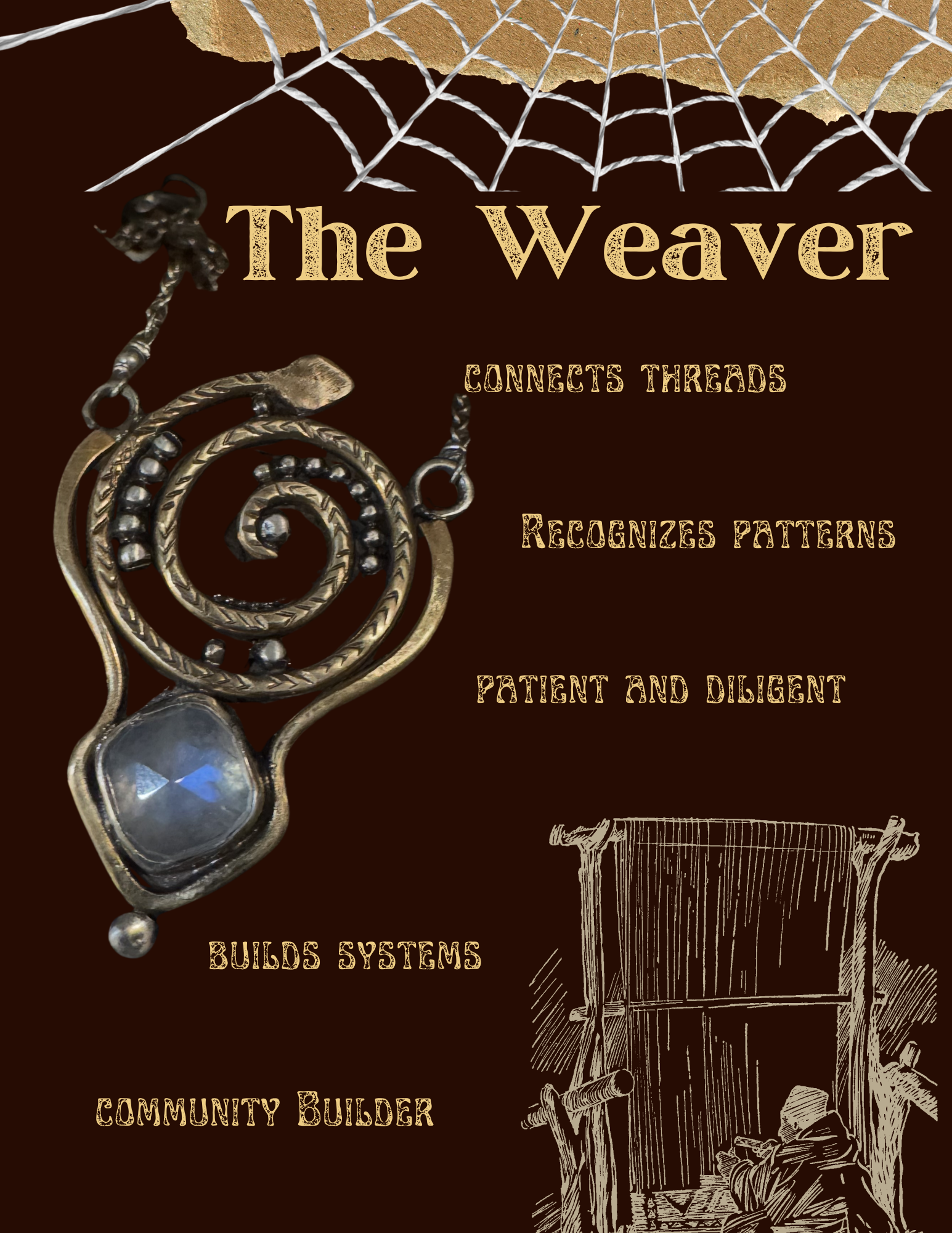
The Weaver is the archetype of relational intelligence. She is the ability to see, tend, and strengthen the threads connecting people, systems, time, and life itself, understanding that nothing exists in isolation and that every action ripples outward. She works across past, present, and future, recognizing patterns not to control them but to repair and reweave what is fraying or harmful. Valuing interdependence, she builds resilience through relationship, consistency, and care over time, often through diligent work like repairing trust, bridging differences, and holding complexity while guiding connection. At her deepest expression, the Weaver protects continuity, helping carry forward wisdom, story, and care so life can continue evolving.